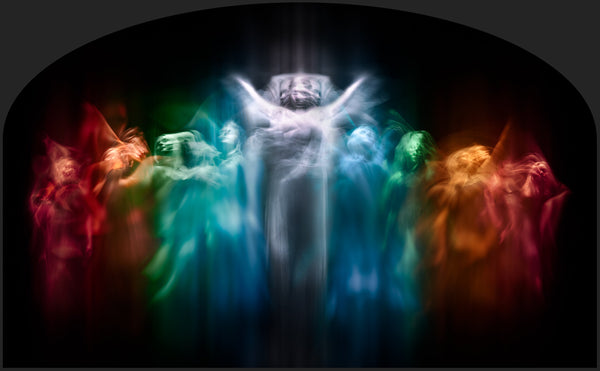

Michael Jalaru Torres is an Indigenous fine-art photographer and poet from Broome, in Western Australia, and the founder of Blak Lens. He photographs culturally significant events, builds pathways for other Indigenous photographers, and treats the camera as a storytelling tool rather than the point of the work.
Our conversation with him was one of the most thought-provoking we have had, and there is plenty in it for any photographer about whose stories get told, and who gets to tell them.


Who holds the camera matters
Michael's central idea is that for most of Australia's history, Indigenous people have been photographed rather than the ones photographing.
“Being Indigenous, a lot of the Indigenous aspect of Australia has been through a wide lens, and we've always been a subject and not the capturer or the photographer.”
Putting cameras in the hands of Indigenous photographers changes that and does something for the next generation, too.
“It also inspires the next generation to pick up a camera, because for them it allows them to see that they can be part of that as well, and it's getting away from always being the subject. And just giving that power back to our people.”


Blak Lens: turning a frustration into a directory
Blak Lens grew out of something Michael noticed when he moved from Broome to Melbourne: that a major city had surprisingly few First Nations photographers visible. So he built a network and a directory to fix the most common excuse he heard.
“One of the qualms of it all is that mainstream says, I don't know any First Nations photographers, so they always then choose a non-Indigenous photographer. Well, there's a directory now. You can see where they are in their regions and states, and people can chat to them directly to book them for a job or buy a print.”
It is already changing careers and lives. Photographers who joined as emerging talents have gone on to shoot national campaigns and work for the New York Times, with the group sharing knowledge and opportunities freely rather than gatekeeping them.


Photography is a tool for storytelling
Michael is quick to shift the focus away from gear and technique and back to the story.
“I'm more a storyteller, and photography is just a tool that I use. That's why you see my work is very different at times, because I stylise and create the work to match the story I'm telling at that time.”
That story-first approach shows up in how he works. He plans a shoot in a notebook and makes his decisions before he ever lifts the camera, so the shooting itself is quick, and the energy goes into the people in front of him.
“I map it all out so I make all the adjustments before I even press the shutter button. It could be an hour session, but we'll probably talk for 40 minutes, and the actual shooting will take less than five, maybe 10 minutes.”


Show the excellence, not just the hardship
Michael is candid that it is a hard time to be a First Nations creator in Australia, with work too often curated to fit one narrow expectation. His response is not despair but insistence on a fuller picture.
“Sometimes we're at a point where we actually want to show the positives and the excellence of our people.”
He is pointed about tokenism, too, especially competitions that add an Indigenous category without an Indigenous judge to understand the work. And he is careful to end on a note of strength rather than struggle.
“I don't want to make it sound like a big downer, because we are resilient, we're not fragile. It's just a frustration that the rest of the mainstream community won't see amazing work because it's been gatekept by ignorance and laziness.”


Gear that serves the story
Michael's gear choices all come back to the work. He came back to photography on a Canon 7D with a kit lens, moved up to a 5DS for his fine-art work, then switched systems when the maths stopped making sense, finding he could buy two Fujifilm bodies and two lenses for the price of one new Canon RF setup. He fell for the little Fujifilm X100, shoots an X100V now, and built his medium-format work around the Fujifilm GFX100, whose dynamic range he raves about. His desert-island pick is the GFX100 with the 80mm. He also shares a handy archival tip for anyone shooting JPEGs: convert your files to DNG straight away, so they hold their quality the way a RAW file does. And he is currently playing with LiDAR scanning on his phone; building 3D captures of a place purely for the love of experimenting.


Listen to the full conversation
Michael took us on a deep dive when he joined us on The Camera Life, from growing up in Broome and the scale of his work across Western Australia to founding Blak Lens and where he sees Indigenous photography heading. You can find his work at jalaru.com and learn more about the network at Blak Lens. You can watch or listen to the whole conversation on YouTube, Apple Podcasts and Spotify. The show is backed by Lucky Straps, who make handmade leather camera straps in Bendigo. You will find them at luckystraps.com.