






The Fujifilm X100 series of compact digital mirrorless cameras has acquired a cult-like status thanks in part to its retro design inspiration, rangefinder optics, application of Fujifilm Film Simulations, and a fixed 23mm F2 lens. Those core elements have proven to be the cornerstone of every generation of the X100 series. It’s also fair to say that those elements are what attracted me to step into and embrace the Fujifilm ecosystem. A move that not only changed my relationship with photography but also set me on a path to become a writer, product reviewer, Fujifilm Fan Boy, and champion of Fujifilm’s X and GFX digital mirrorless camera and lens systems. That journey, starting with the OG X100, has afforded me the privilege of testing and reviewing almost every Fujifilm X and GFX system.

My relationship with the Fujifilm X100 is one of admiration and discovering the true joy of photography. Prior to picking up Fujifilm, I was a Canon photographer working with APS-C and then Full-Frame DSLRs and big L-Series lenses. My gear bag was always heavy thanks to all that gorgeous glass. But that weight, and the resulting neck and back pain, gradually eroded my joy of photography. I was struggling to find the motivation to head out the door to make art from my images. Fortunately, my saviour was a short stint with a borrowed Fujifilm X100 - the OG! As soon as I picked up the compact, fixed-lens camera, I was enamoured by its retro styling, its compact, lightweight form, and how comfortable and fun it felt to carry around on photo walks. Once I saw the resulting images and the use of Fujifilm’s now famous colour science, my fate was sealed. I quickly sold all my Canon gear and invested in a Fujifilm X100. Not long after, I invested in the revered Fujifilm X-T1, with the XF 16mm F1.4 and XF 23mm F1.4 prime lenses. While the X-T1 and lenses were my main jam, the X100 was an ever-present companion.

Released in 2011, the original Fujifilm FinePix X100 was a statement to visual creatives looking for an all-in-one system capable of documenting everything from family and friends to travel destinations. They’ve since dropped the FinePix branding, as it belonged to other Fujifilm point and shoot models that no longer exist. And let’s not forget its status as one of the best street photography cameras around. Skip ahead to early 2024, and Fujifilm released the highly sought-after X100 VI. While we will get to technical comparisons a bit later, the latest iteration of the X100 series proudly shows its roots and evolution from that original model. I previously reviewed the X100 VI for another publication and gave it high praise. In fact, over the 13-year period between the original model and the VI, I have owned and or tested every generation of the system.
Fujifilm X100 Specifications
- 12 MP APS-C CMOS Image Sensor.
- EXR Processor
- Fujinon 23mm F2 (35mm Full-Frame Equivalent).
- Leaf Shutter
- ISO 100 - 12800
- Hybrid Optical/Electronic Viewfinder (1.44M dots)
- 2.8" LCD screen, 4:3 aspect ratio, 460,000 dots
- Built-In 3-Stop ND Filter
- Built-In Flash & Hot Shoe
- NP95 Lithium Ion Battery
- SD/SDHC/SDXC Memory Cards
- 126 x 74 x 54mm
- 445g With Battery & SD
By today’s standards, that list of specifications may seem a little on the low side. And they are. But back in 2011, the X100 delivered great image quality, packed with character, and Fujifilm’s colour science expertise. Where the original X100 boasted a 12MP APS-C CMOS sensor, the latest X100VI is packing Fujifilm’s flagship 40.2MP X-Trans CMOS 5 HR image sensor complete with 6-stop IBIS. The original X100 featured a fixed 2.8” 460K dot LCD and a 1.44M dot electronic viewfinder. As for the X100VI, it delivers exceptional resolution with its 3″ 1.620M Touch Tilt Screen and vibrant 3.690K EVF. The size and weight of the two generations are incredibly close, thanks to Fujifilm’s dedication to delivering a compact camera system. It means that anyone migrating from one gen to the next gains instant familiarity with the new model.
Fujifilm X100 - One Of The Sexiest Cameras Ever Made!

It still amazes me how many people see the X100 and question whether it is a classic 35mm film camera. I am equally delighted to inform them of its origins as a compact digital camera. Regardless of whether you carry the original X100 or the latest X100 VI, that question remains. It just has that classic and timeless look of a rangefinder camera. I think the Fujifilm X100 series is one of the sexiest cameras of the digital mirrorless age! It proudly boasts styling that Fujifilm has carried forward not only in the X100 series but also in other X and GFX models, including the X-T (1 to 5) and the more recent GFX 100RF. Speaking of which, the GFX 100RF is a fixed-lens, larger-format camera that boasts a 100MP image sensor and borrows heavily from the X100 range's styling. It’s the big brother on steroids!

Starting with the right side of the top plate, the original X100 features a Shutter Speed dial, an Exposure Compensation dial, an On/Off Toggle with the shutter button built in, and a single customisable Function button. The left side of the top plate bears Fujifilm branding and the centrally located hot shoe. The left side is elevated so that the right side dials sit flush - it’s an aesthetic that has continued throughout every gen of this camera. The front of the X100 is home to the fixed, Fujinon 23mm F2 lens featuring 8 elements in 6 groups and a leaf shutter. The lens barrel is incredibly shallow to avoid protruding too far from the body. Regardless, the Fujinon lens boasts not only a manual aperture ring but also a focus ring. Granted, these two rings are quite thin, but they are still accessible and usable, offering greater freedom when using the camera. The front of the top plate houses the OVF's front element, a small but effective built-in flash, and a toggle that controls the hybrid OVF/EVF options. The right side of the body houses charging and connectivity ports, and the left side features a focus select switch to quickly change Autofocus, Continuous Autofocus, and Manual Focus.

The rear of the X100 is a little less attractive than the rest of the design. While it features all the necessary controls, dials and the 2.8" LCD screen, the arrangement is cluttered if not a little clumsy. The LCD is fixed and protrudes from the back of the camera. The EVF-OVF eye cup also protrudes from the body, but in a good way that provides greater comfort when the camera is up to your eye. To the left of the LCD are four control buttons, and to the right is a flat control dial for navigating menus or accessing quick modes such as White Balance and Flash. Three buttons surround the control dial while above that a single customisable toggle allows for quick setting changes for functions such as ISO. Given that this is the first generation of the X100, Fujifilm can be pardoned for the less-than-ideal design, and it has redeemed itself with future generations featuring a larger LCD, better button placement, and more options. Regardless of this minor gripe, the OG X100 is still one of the sexiest cameras ever made!

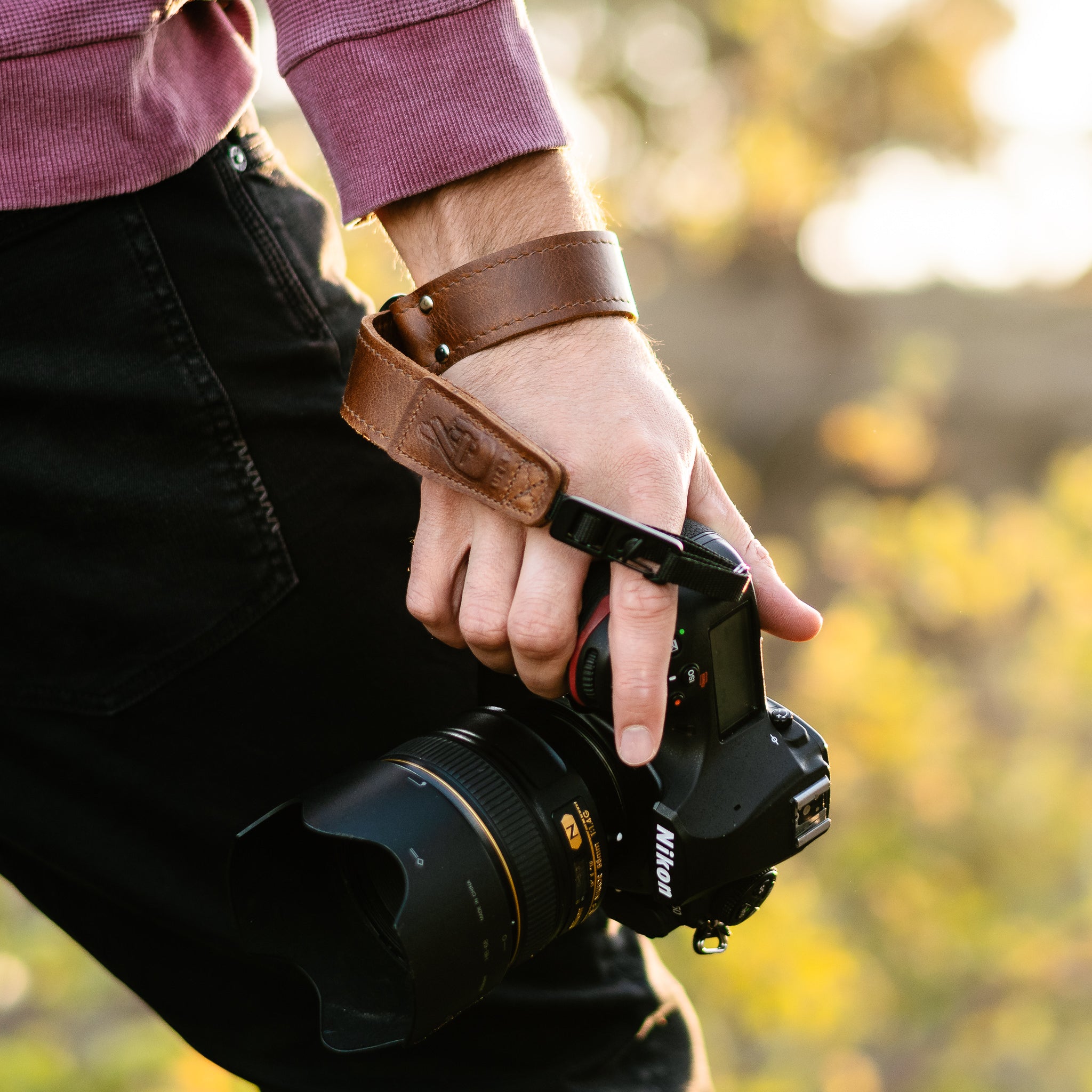
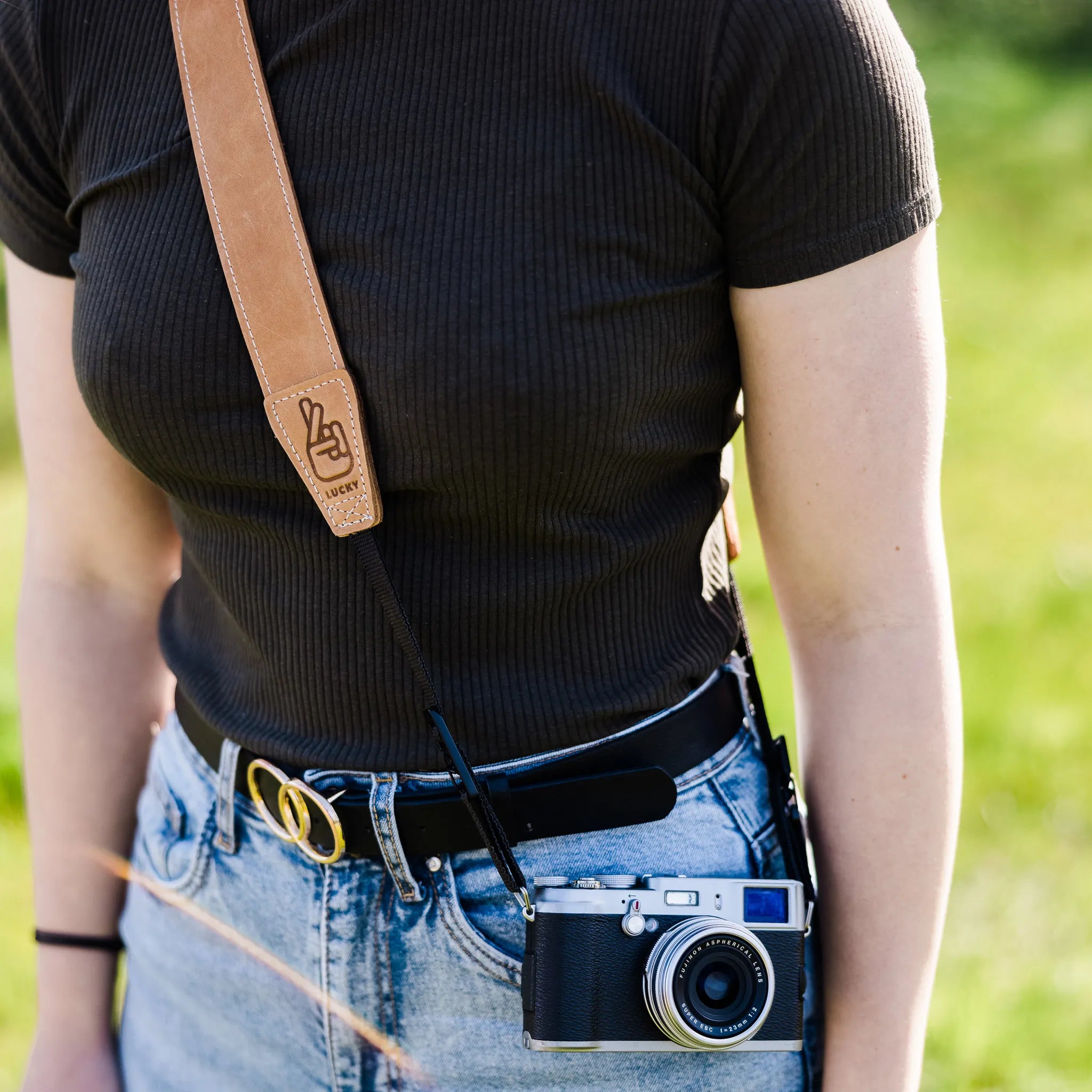
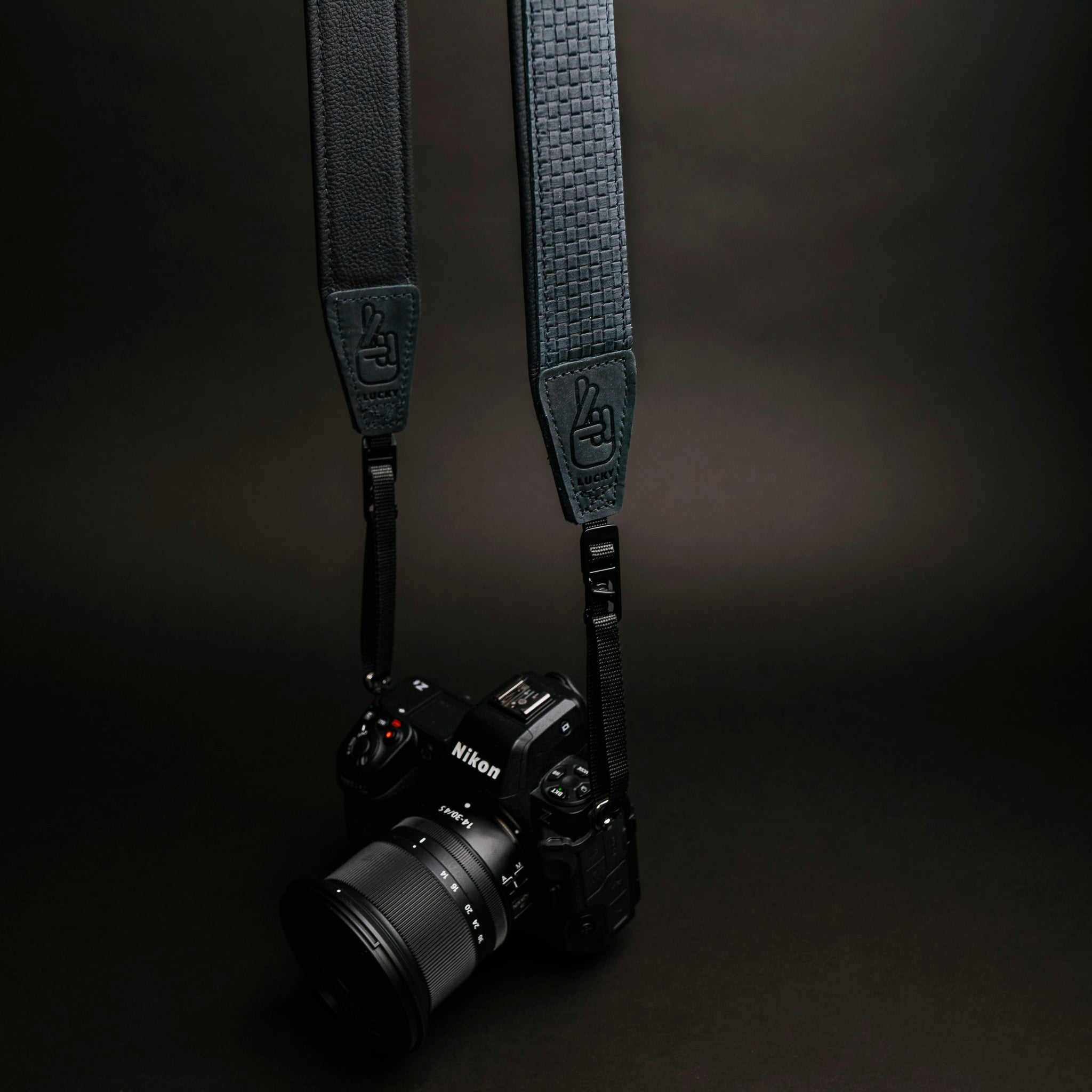
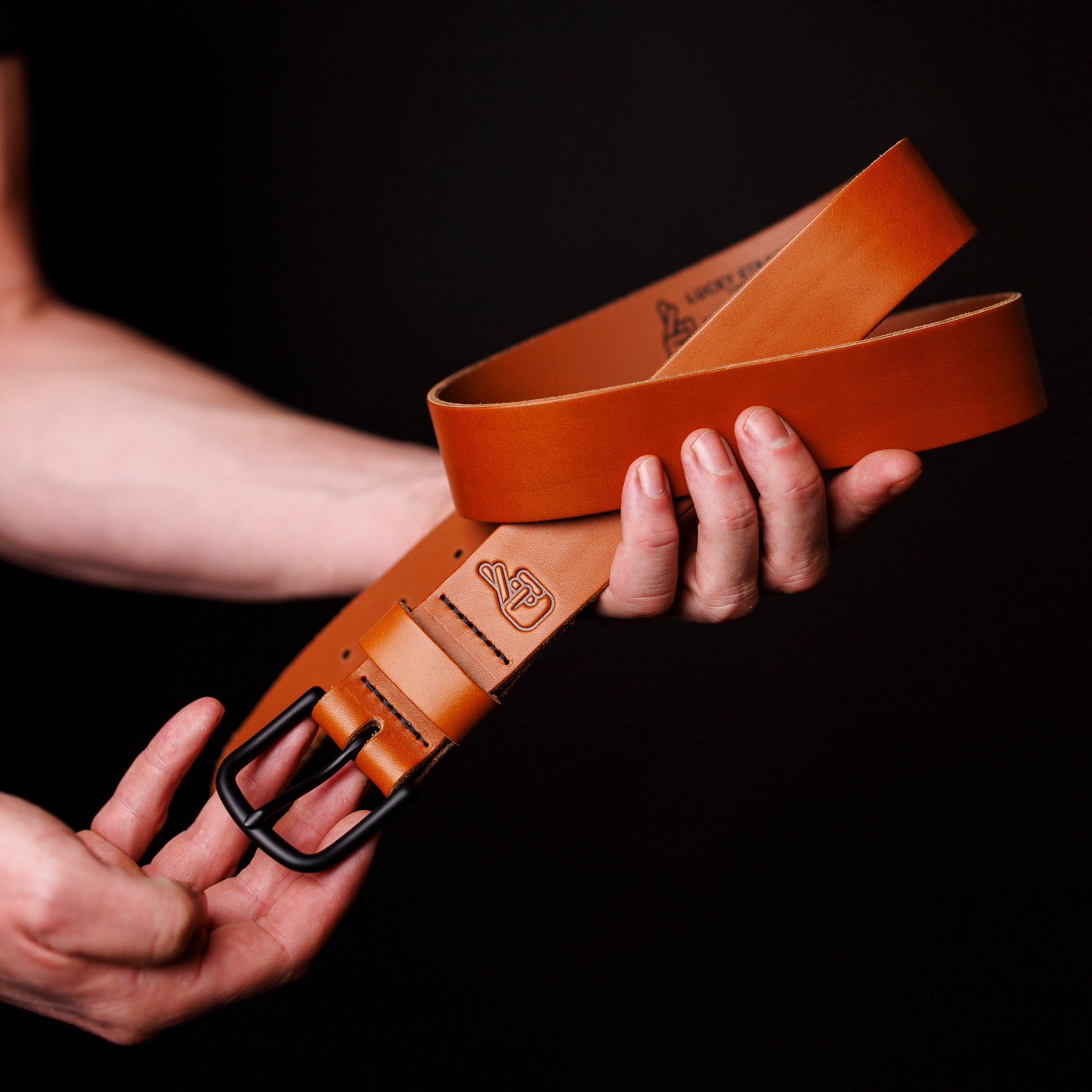
Plus, when you drop a high-quality accessory, like the Lucky Straps Classic Leather Wrist Strap on the body, it absolutely nails the retro look. What’s more, given the camera's size and weight, the Lucky Straps leather wrist strap offers exceptional comfort, security, and creative freedom.
What’s The Handling Like?

When it comes to assessing the Fujifilm X100 ergonomics and handling, there’s a lot to keep in mind. First and foremost, the camera is fifteen years old and at the time of its release, digital camera technology was still advancing - especially in the mirrorless space. Despite its age, the X100 offers some discreet but important ergonomic considerations. For one, the front of the body features a slight bump to provide greater grip. The top-plate command dials, front EVF-OVF toggle, and all buttons are well-sized and offer responsive feedback when in use. The Shutter Speed and Exposure Comp dials are textured, clearly marked, and offer just the right amount of resistance to prevent accidental changes. The same can be said for the fixed Fujinon 23mm F2 lens. Yes, the focus and aperture rings are small, but the focus ring is gnarled, whereas the clicky aperture ring features two small, gnarled tabs to control aperture. Everything is accessible, and the camera feels great to hold and control.

One of the neatest tricks of the Fujifilm X100 series is the hybrid OVF/EVF. It all started with the original X100, which allowed photographers to shoot in true rangefinder style with an optical pass-through viewfinder. However, the X100 also boasts an electronic viewfinder via a monitor panel that drops in to provide a digital view and cover the optical passthrough. It’s especially handy when using manual focus to determine if your subject is sharp. What I love most about the Fujifilm X100 is the ability to instantly dial in settings via the rear ISO toggle, top Shutter Speed dial, and front aperture ring on the lens. It’s never been easier to fully control the Exposure Triangle. Once you commit the control layout to muscle memory, shooting with the X100 is a delight.

As for performance, the Fujifilm FinePix X100 behaves as you would expect from a fifteen-year-old camera. The smaller NP95 (also the same battery used in my Fujifilm X70) delivers between 200 and 300 shots, depending on other functions in use. By today’s standards, and in comparison to even older DSLRs and mirrorless cameras, that’s pretty low. But again, it is fifteen-year-old technology! Fujifilm still takes a fair bit of flak for its autofocus performance and speed. The X100 probably started that reputation as the focus performance and readout speeds are quite slow, and focus hunting is a common occurrence in less than ideal conditions. It’s especially frustrating as the front element of the lens breathes in and out while hunting for sharp focus. It physically taunts you! The X100 features a 49-point Contrast Detect Autofocus (AF) system. Fortunately, more recent iterations of the X100 have improved performance across the board, especially in focus speed and accuracy. Fujifilm has progressed in this field as the current gen X100 VI is a powerhouse that offers fast and accurate focus with flagship features and outcomes.
My Experience On The Streets With The Fujifilm X100

As a street photographer, the Fujifilm X100 series is a dream come true. And for me, that first X100 is where my true street journey took off. Its compact and lightweight form allows for all-day carry with little strain or discomfort - a huge difference from my early experiences with larger camera systems. Equally, keeping the X100 in an everyday bag means that I have access to a camera at all times. Another big plus for us street photographers is that the X100 is discreet. Other than the odd curious glance at the retro-styled-rangefinder, it doesn’t call attention to itself. Those were my early impressions from back in the day when I first owned the camera. And they still hold true today. Picking up the OG X100 once more has been a blast from the past, but not without its frustrations.

There’s a lot to be said for the continuity of use from one X100 generation to the next. However, one of my biggest complaints is the fixed rear LCD. It doesn’t tilt, and often I went to shoot from the hip only to realise that I couldn’t frame a composition confidently. And as for that slow, old autofocus system, I noticed how often I missed a shot, especially while on the move. I would see the composition, see the subject moving into frame, and press the shutter only to have the focus hunt in and out. It’s also important to keep in mind that I am used to working with the latest Fujifilm X-E5, boasting flagship-level features and performance. Overall, though, I had a blast getting out and about with this amazing compact, fixed lens camera. I never once opened the menu system, and I was present and focused on the scene.
Did The X100 Live Up To My Expectations?

Overall, the original Fujifilm X100 is an amazing camera that delivers impressive image quality rich with character and incredible colour reproduction. While it was a long time ago and my memory is fading, taking the X100 out on the streets again showed me why I fell in love with the camera all those years ago. And why I fell in love with Fujifilm as a brand. Given the similarity of controls, customisable options, and menu navigation, I quickly reacquainted myself with the X100 and made the most of my time on the street. Walking the streets with the X100 again rekindled my regret about ever selling my original one. Granted, I upgraded to a newer generation while also building on my X-series bodies and lenses. But there’s something to be said for hitting the streets with an older camera and loving the process and the outcomes. The image quality won’t impress the pixel-peeping chimpers, but it does offer character and a decent level of resolution that’s fit for purpose.

It’s easy to see why the Fujifilm X100 has acquired a cult following and laid the groundwork for a multi-generational, compact digital mirrorless system like no other. At launch, the Fujifilm X100 cost around $1,200 AUD. For comparison, the latest X100 VI launched at around $2,900 AUD back in early 2024. In terms of resale value, the OG X100 still sells second-hand for around $800 AUD. Recent generations of the X100 series (V & VI) have also caused quite a commotion, with units selling out before they even arrive in stores. And the collectors' edition of the X100VI (celebrating Fujifilm’s 90 years) was scooped up by scalpers, who later listed the camera at ridiculous prices. It's interesting to ponder where the X100 series will go next. Want to hear my hot prediction? In 2034, Fujifilm will turn 100, and it is my guess that by this time, Fujifilm will be ready to unveil a Fujifilm X100 X - a tenth-generation release to celebrate 100 years of optics and image making. Now that’s something worth saving up for.